Monday, 30 April 2007

The Fifth Branch of Government: What the President of the Talossan Republic Is


an essay by Miestrâ Schivâ - written before the last Chamber election, but still relevant in its conclusions

The Ministry of Information, on the new updated talossa.com pages, describes Talossa as a “semi-presidential” system. This, we are informed by our good friend Wikipedia, means a system in which executive power is shared between a directly-elected President and a Prime Minister responsible to the legislature. I want, in this article, to examine the peculiarities of Talossa's twin-headed executive, which, I feel, is one of the least-understood parts of our Republican constitution – and, potentially, one of its most productive.

The international comparison

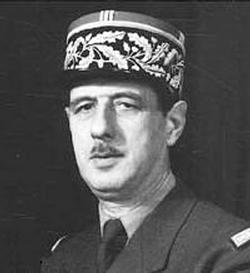
A “semi-presidential” system has been used most famously in France's “Fifth Republic (1958 – present). After thirteen years of stagnant, do-nothing governments lasting less than a year on average in a fragmented legislature, the war hero Charles de Gaulle finally decided he'd had enough. He got himself elected to the figurehead presidency of the Fourth Republic and instantly set about bringing in a new system where it would no longer be a figurehead. He could have gone for the American-style system, where the executive would be entirely divorced from the legislature and put in the President's hands. Instead, he brought in a system where the President would play a vital role in governing the nation – but alongside the leader of a parliamentary majority. This would bring some vital stability to the system, but not be too much of a break from French constitutional traditions.

The defining feature of semi-presidential systems – as perhaps you have figured out by now – is the possibility of cohabitation, a situation where the President and the parliamentary majority are from different parties. This leads to a situation which can either be “an admirably display of political consensus building” or “total stagnation and permanent bickering”, depending on concrete circumstances. For an example of what the latter has meant in practice, read Talossan history of the late 1980s, where two or three governments were elected from the parties opposed to King Robert (this was when such a thing was still possible). Or even worse, Sri Lanka, where the Prez and the PM just about kicked off a civil war between them a couple of years back.

The interesting thing about semi-presidential system the world over is how flexible they can be. Some countries, like Finland, precisely define fields of responsibility between the two chief executives – for example, the President is in charge of foreign policy. Others, like France, have let this evolve by convention. A system that is sufficiently flexible can let itself change through circumstances. For example, it is said in France that the system tilts strongly in favour of the Prime Minister during cohabitation periods, and towards the President when a single party is in control.

This flexibility is why I and the other members of the Constitutional Convention decided to adopt a flexible, semi-presidential system. There are arguments for a parliamentary democracy and for a presidential system. We hoped that, in practice, the ideal balance for Talossan conditions would come about naturally. But Talossan history weighed very heavily on the precise “ground rules” we laid for how a dual executive would work itself out.


Building our own system


The history of the pre-revolutionary Kingdom was very similar to that of modern Egypt. On paper – a strong head of state is balanced by a strong Prime Minister. In practice – the head of state completely dominates through “informal” influence, and occasionally through total misuse of power. To a large degree, the President of the Republic would be stepping into the role left by the King of Talossa. This has influenced the range and scope of powers he was able to wield. One peculiarity is that in most semi-presidential or parliamentary republics the President can give pardons, and gets to appoint the Prime Minister. Both these powers were misused by King Robert I and are heavily circumscribed in the Republic. Pardons can only be given by approval in referendum, and the legislature directly elects the Prime Minister (as in Germany, which has had its own problems with the executive going nuts).

The question from here is – did we go too far? Some countries, like Austria and the Irish Republic, have semi-presidential constitutions. However, in practice they are plain parliamentary states – the convention has evolved that the president simply does not use their powers. The Irish President, for example, has never vetoed a bill. The only time the Austrian presidency ever made the news was when an ex-Nazi got elected to it. Some people might wonder whether the Talossan Republic does not fit under this category. Is not the Seneschál the undisputed leader of the Talossan government? To what extent is our Prüm Citaxhiên a genial figurehead, an elected constitutional monarch, like the Irish Uachtaráin or the German Bundespräsident?

Looking at the facts

So, what exactly is the President of the Republic entitled to do? By the Constitution of the Republic he is our “Head of State and Defender of the Constitution” (II.1.1). “Head of State” is something of a formal, figurehead description, but it has one very vital connotation in the Talossan context – the President “represents the Republic in matters of international law” (II.1.8(a)). Traditionally, the King of Talossa represented our nation to the world outside – in practice, being chief spokesman to the macronational media and other cultural industries (Wired magazine, Lonely Planet, art galleries etc etc.) This has not been something that has come up yet for the Republic. But as our marketing strategy begins to crack into gear, it certainly will. In addition, the President's power to appoint ambassadors (II.1.8(a)) makes him the head of our Diplomatic Corps, and thus a vital power in the field of relations with other “nation-like entities”.

Both the Seneschál and the President are members of the Government, the entity which exercises the executive power of the Republic (II.3.2). The President “chairs” meetings of the Government (II.3.10) and is authorised to break ties in the Government (II.3.11), while the Seneschál “determines the general course of Government policy as a whole” (II.3.5(a)). The President is therefore a faciliator of the functions of the Government, while the Seneschál sets the agenda. The President therefore acts as a “safety” for the Government in two ways. A coalition government, or one facing serious splits, might need a neutral mediator to put things back together again. On the other hand, a too enthusiastic and united government might decide to attempt to misuse its executive power – something prevented by the fact that Executive Orders go out in the name of the President (II.1.8(f)).

Of course, the President also acts as a “safety” for the legislature, in his function of performing the final check over new laws before they go out in public (II.3.30 et seq), and to be able to dissolve a fractious or non-performing legislature (II.1.9(b)). As for the other branches of Government – the judiciary and what “civil service” we have, namely the Secretary of State's office – these are directly appointed by the President himself, in most cases with legislative approval.

We might describe the Presidency of the Republic as a fifth branch of the Republic's government (if the fourth is the “civil service” represented by the Secretary of State). Two of the first four branches are appointed by the President – the other two are elected by the people, but the President has a role as “safety” in both roles (hence the term “Defender of the Constitution”). He is part of all executive or legislative decisions (or at least has the right to be), and can step in to fix either branch of government if it falls to bits or goes too far.

The constitutional monarchy of Great Britain traditionally has three roles - “to advise, to be consulted, and to warn”. Similarly, the Brazilian Emperor was said to be the “moderative” branch of government. “The moderative branch” could possibly be a good way to see the Presidency of the Talossan Republic:

s/he is the link between all the other branches of Government;
s/he plays a facilitating and oversight role in all of them;
s/he acts as a fusebreaker if any of the other branches of Government reaches a crisis;
s/he represents the Republic as a whole, both to itself and to the outside world.

For the executive and the legislature, the President acts as a “brake” to the “accelerator” role of the Seneschál and the legislative majority. S/he also acts as an “arms-length” supervisor and final problem fixer for the judicial and civil service branches. S/he is the glue that binds the separated powers of the Republican state together – and therefore is the ideal person to be the “face” that the Talossan Republic shows the world. As we grow and develop, this latter role will, I believe, become increasingly vital, and the Presidency will certainly become more important and prestigious – if not necessarily more powerful.

So where are we?

As noted above, it is said in France that the semi-presidential system turns to a parliamentary system under the weight of cohabitation. Thus it has proved in the Talossan Republic. Peculiarist President Vercáriâ has certainly not had enough weight in legislative or executive matters to get any positive planks enacted, and the parliamentary majority has maintained its cohesion – thus, it has generally run things unfettered. On the other hand, the President's power to delay legislation and executive orders has required careful thought and consideration on certain matters. And he has certainly played a role (albeit a small one) in representing Talossa to the outside world, at least as far as intermicronational discussion for a.

But before this, President Gruber didn't play a much more vital role in a government composed of members of his own party. He held certain portfolios in the government, but the initative was left with the Seneschál in most matters. When President Gruber did raise specific “platform questions”, the matter was generally let slide. Indeed, it can be said that the Seneschál and the parliamentary majority have in practice ruled in the Talossan Republic – with the President actually exercising a more determined (if negative) role in a period of cohabitation.

In many countries debating a parliamentary-republic system, direct election of the President has been opposed because this presupposes a political election and therefore a President who will have a political agenda and want to use it, turning the system semi-presidential in practice. The highly partisan Talossan presidential elections so far have seemed to disprove this.

Is, then, the Talossan Republic a parliamentary system with a few knobs on? Or a semi-presidential system whose Presidents have, to date, either not wanted, not had the chance to, or not known how to use their powers? Only a few more years under the current constitutional setup can truly sort that question out. Perhaps it's just that we haven't had a President yet who wanted to play a role setting policy in any area – or a real occasion for the “external representation” functions of the Presidency to be used. Until either of those happens, el Prüm Citaxhiên dàl Repúblicâ will probalby continue to function as 'n viac'htéir constituziunál, or an elective constitutional monarch – albeit a unusually active one.

Friday, 13 April 2007

Schivâ to Txáglh: Mostretz-mhe el ërxhënt

(a transcription of a speech given by Dp. Miestrâ Schivâ, Defencist Spokeswoman on Culture, in the Chamber of Deputies today)

Estimat Deputats:

A few weeks ago, s:reu Txáglh, the new Minister of Culture, sent out a press release that seems to embody the Peculiarist government's cultural policy. Seeing as the Minister is the only member of the Peculiarist government who is doing anything at all, it seems a little unfair to pick on him. But then, the longer the Peculiarist leaders sleep, the easier it will be to vote them out come September. So I will refrain from waking them up just yet.

Anyway, as to s:reu Txáglh's "press release". To start with, it is refreshing that the Peculiarist government - at least one member of it, anyway - is taking the Talossan language seriously. We hope that this attitude has been thoroughly accepted by the MRP as a fundamental value of their politics, and not as a tactical manouver.

The centrepiece of Defencist cultural policy is the "one nation, one culture, two states" policy. The Minister of Culture says "Talossan culture" over and over again. He does not say "Talossan-Republic culture". He says "the Talossan heritage is shared" between the two states. This is excellent. But we note with disappointment that the statement of the minister contains no concrete proposals on how to further linguistic cooperation between the two Talossas, aside from the pious hope that it will be so. Is this an immediate effect of the government’s so-called Wu Wei policy of remaining passive and reactive in Pan-Talossan Affairs?

If there is not joint language work with citizens of the Kingdom, the Talossan language will inevitably split into dialects, and the single greatest cultural tradition of our Nation will be lost. But not only does the Peculiarist government seem to want to create a language policy while ignoring the Kingdom, some of its members show a distressing indifference to what even non-Peculiarist Republicans have done. S:reu Jay Shorten, our Secretary of State, wrote three very good chapters of an introductory Teach Yourself Talossan textbook. Do the Peculiarist cultural mavens have any interest in carrying on with this vital project?

On the subject of the national language, the Defencists offer the following concrete proposals:

- We demand that the government respect the academic freedom and legal authority of l’Icastolâ and continue to work within the cultural framework already in place. What is this new “Istitüt del Glheþ Talossán" that the Minister speaks of? Is it something the Peculiarists have made up on the spot, to bypass the existing structures established by the cultural law which the previous Defencist majority passed? Or did s:reu Txáglh simply not understand the current law? If so, his ministeral colleagues should explain it to him.

-We expect, in the interests of the language, that government cultural officials will continue the ZRT’s initiative and will participate in the Kingdom’s language forums, as an interim solution to the long-term problem of cross-border language cooperation;

-We call on the government to implement the ZRT plan to expand the literary culture of the Talossan language with a regular column in el ghleth on Talossa.info, once they have decided who will be responsible for publishing it;

-We take the Minister at his word and will expect further helpful brochures on common words and phrases in el ghleth, on the successful model of “Prüms Pacens”. Education is a responsibility that must be assumed by the government, and we will accept no excuses from the Ministry if it ails in this regard.”

On the other issues min:eu Txáglh raises, we are impressed with and supportive of his initiatives. We think that the idea of a central register of all cultural projects is exactly the kind of thing the Ministry should be doing. We also consider the "Virtual Haxh" an excellent idea, and are frankly amazed that it comes out of a party whose leadership are famous for being indifferent at best to the Milwaukee roots of Talossan culture.

We note however that when the ZRT government launched an initiative to create a comprehensive map of the national territory, an essential element in understanding where we come from as a nation, the only public comment from a member of the MRP was a complaint that it was one initiative too many. We are pleased therefore that the MRP have decided that it is worth the effort after all.

But if culture is to be, as min:eu Txáglh rightly says, our "shop window", then simply throwing up our hands and saying "the initiative must come from citizens" is not a good enough attitude from a Goverment. The Wu Wei government seems to think that if the Government does nothing, then culture will "just happen". Certainly it will, but what kind of culture? It is certainly true that the existing population base will create its own culture, naturally. Popular culture can take care of itself. But official, national culture - the kind which we proudly display on our websites and our promotional material, the kind that our citizens can cheer about on Liberation Day or National Day - needs special protection and leadership. We shouldn’t confuse the two.”

In the absence of a strong initiative to create attractive cultural artifacts that will attract new citizens, the culture of the Talossan Republic will be nothing but the injokes and jargon of a stagnating clique. Promoting Talossa in the macronational media, and emphasising its cultural artifacts like flags and newspapers is a strategy that has worked in the past. We need ID cards; we need flags; we need patriotic T-shirts; we need incentives to create patriotic art in English and Talossan.

Even one small concrete cultural project designed to advertise our Republic to newcomers would be a welcome bonus from the Peculiarist government. I look forward to interest as to whether the "Virtual Haxh" actually ever exists, or whether the Peculiarists will just expect some Defencist to do the work for them - as seems to be their habit.

Thursday, 22 March 2007

ZRT Press Release: Finance Amendment

Deputy Inxheneu Crovâ today (22.03.07) introduced the Finance (Webspace Nationalization) Amendment Bill. The ZRT believes that the Ministry of Technology requires the freedom to choose the most effective technical and financial solution for the Republic's domain registration needs, and that OnlineNIC, the original service provider, is simply inadequate for this task.

The ZRT is anxious to begin this discussion in order to facilitate the process of Webspace Nationalization and thus has assumed the responsibility of introducing this legislation.

The text of the Bill, which is presently for discussion before the Chamber of Deputies, and is the first Bill to be introduced before the 5th Chamber of Deputies, can be found at http://www.talossaonline.com/30.1223.0.html

For Deputy Crovâ's original statement, setting out the position of the ZRT on the issue, see his statement to the Chamber at http://www.talossaonline.com/30.1213.0.html

STATEMENT ENDS

Wednesday, 21 March 2007

A Statement on Webspace Nationalization

Statement by Deputy Inxheneu Crovâ to the Chamber of Deputies

Estimats Túischac'h,

While I can well appreciate the disorganization that comes from an unexpected victory, I find it it surprising and disturbing that there has been no official response from the Seneschal or indeed the President to the latest crisis in the operation of Wittenberg. Adding to my disquiet is the ongoing lack of any statement on the shape of the new government, and what priorities it will be pursuing in this 5th Chamber of Deputies.

I will say, however, D:na Túischac'h, that I can testify to the efforts of Deputy Lowry in the matter, and can say without hesitation that he was a credit to my government in his capacity as Minister for Technology, and I hope the Seneschal, when he finally makes an announcement as to the composition of his government, will retain him in this position.

I would now like to make a formal announcement of my intent to submit to this Chamber, short of any government action within the next 24 hours, an amendment to the Finance (Webspace Nationalization) Act authorising the Minister of Technology to use his/her best judgement in securing a long-term provider of domain registration services.I do so reluctantly, but I have come to the conclusion that OnlineNIC is simply not a good deal for the relatively small number of domain names that the Republic will own at the end of this process. We will also be proposing practical measures (that will not require legislation) to cope with a similar technical emergency in the future.

D:na Túischac'h, I would like to now explain to the Chamber my efforts thus far to complete the Webspace Nationalization process. My initial attempts to facilitate the transfer of the domain names from their previous owners to the Republic was a private initiative on my part to set up an OnlineNIC account and to receive not just the domain names mentioned in the Webspace Nationalization Act, but also other Talossa-related domain names which could have proven useful to civil society in its broadest sense, or to simply let them expire if there was no demand for them.

This initiative met with failure, as OnlineNIC went through a prolonged technical crisis just as we were attempting to perform the transfer, by the end of which the transfer deadline had expired. Subsequent to this, despite my best efforts to contact S:reu Furxheir, I have received no cooperation on a new transfer, until today. I am reliably informed that there has been another technical issue with the transfer, but this is hopefully more minor and will be resolved by tomorrow at the latest.

My suggestion, that I will be backing up with legislation if lack of government parliamentary action makes it necessary, is that the Republic use the already funded OnlineNIC account that I have set up, and that Deputy Lowry has full access to, in order to relieve S:reu Furxheir of the responsibilty of owning the domain names he currently controls. The Minister of Technology may then, with the monies collected from ordinary citizens under the Finance Act, make the best decision about where to register these names. Then the other domain names mentioned under the Act, owned by S:reu Válcadác’h I believe, as well as one domain owned by myself, can be assembled together with the names that have been transferred through OnlineNIC at a more convenient location.

Finally, D:na Túischac'h, I can speak on behalf of the ZRT when I say that we are sincerely committed to working with the government in ensuring that this final technical step is fully facilitated, and I eagerly await the governments announcement as to their intentions.

Tuesday, 20 March 2007

ZRT says: "Complete nationalisation!"

Press Release from els Zefençadéirs dàl Repúblicâ Talossán

The business of the Talossan Republic was thrown into utter chaos today by a problem with the Wittenberg discussion forums. At the time of writing Wittenberg - the primary and virtually the only means for Talossans worldwide to communicate effectively - had been closed to commenting for approximately 12 hours.

Defencist Deputy Miestrâ Schivâ said that this was an early test for the new Peculiarist government. "The former ZRT government's mandate was - tragically - cut short before we could place the administration of our webspace and Wittenberg 100% in the hands of the Government of the Republic", said Dp. Schivâ. "Will the Peculiarists finish the job?"

Dp. Schivâ noted that the new Seneschál, Eiric Börnatfiglheu, had been slow to name a new cabinet lineup. "We can't wait much longer to complete nationalisation," she added. "We need a new Peculiarist minister of technology and information immediately. And they need to be delegated to make sure this never happens again."

"If all administration rights to our webspace are not in Government hands within a matter of days or weeks," warned Dp. Schivâ, "whatever credibility the Peculiarist minority government has will have crumbled at the first challenge. If so, the President of the Republic will be expected into step in and make something happen."

ENDS

Schivâ elected Speaker of the Chamber

Dp Miestrâ Schivâ has been elected Speaker of the 5th Chamber of Deputies. Party leader Dp Inxheneu Crovâ stated that he believed the Chamber would "benefit from the firm but fair hand" of the new presiding officer.

As expected E.S. Börnatfiglheu of the MRP has been elected Seneschal, with both Deputies of the ZRT voting contrâ. Dp Crovâ is now Leader of the Opposition, and promises to conduct an "active" parliamentary opposition to the new government.

Monday, 19 March 2007

ZRT: Ár Parti Tent 'N Fütür!

Els Zefençadéirs dàl Repúblicâ Talossán, in a slightly bewildered manner, congratulate the Movement for Republican Peculiarism for winning a legislative majority, and commiserate the two minor parties on missing out on seats. We are sure that the Blue Wave and Progressive philosophies still have a vital role to play in the future of our glorious Republic.

We note that, thanks to a splintering of the vote among the minor parties, the Peculiarists have won a clear legislative majority although gaining less than 50% of the vote. We make it clear that this means that the Peculiarists must be extremely careful with any claims of a "mandate" to enact their programme - such as it is.

We also note that the Peculiarists now have a monopoly on the major offices of the national government. Surely this re-iterates two vital points that the Defencists made during our campaign - that, to prevent any national majority thinking it owns the place (especially on less than 50% of the vote), we need both reinvigorated local government, and an activated Senats. And it also gives an additional reason to elect a new President of the Republic in June.

We pledge to being the most vital and intense Parliamentary opposition the Republic has ever seen. We look forward to regaining our legislative majority in September - or sooner, should the Peculiarist government collapse under its own contradictions and the President be forced to call a by-election.

We announce our intention of introducing legislation to enact the Defencist programme, in the confident knowledge that the Peculiarists agree with most of it anyway. We challenge them to shoot down government funding of our PO Box, the reactivation of the Senats and the new Provincial Government scheme. We challenge their "do-nothing" attitude to fostering Talossan culture. And we look forward with interest to seeing what - if anything - they do to promote immigration.

There is an old saying - "be careful what you wish for, 'cause you might just get it". It is possible that the MRP didn't actually intend to win this election. We sense that perhaps Seneschál-elect Börnatfighleu is perhaps more in shock than we are. Whatever will the Peculiarists do without the Defencist government to kick around? Will they rise to the occasion, or sink like a stone? Will this Peculiarist goverment actually last six months?

We will see which side of the Fifth Chamber brings up the new ideas, the bold strategies and the thought-out legislative programme. The battle for the Sixth Chamber - and for the Presidency of the Republic - starts today. Så vivádra la Repúblicâ!

Dp. M. A. Schivâ
Founder-President, ZRT